If you’re in the market for EC (Electronically Commutated) fans, odds are you’ve stumbled on a dozen vendors claiming their units meet international standards. As someone who’s been supplying EC fans for over 12 years—first as an electrical engineer testing units, now as the lead of our customer solutions team—I get a lot of questions from buyers: Are these claims real? Or is it just greenwashing? EC Fan
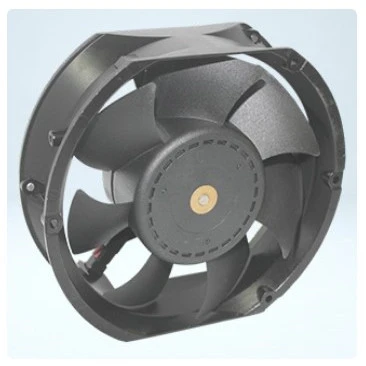
Let me cut through the noise here. EC fans are different from old AC fans because they have a built-in brushless DC motor with an electronic controller, which makes them way more energy efficient. But that fancy tech also means they have to live up to stricter rules than your standard box fan. The short answer? Most reputable EC fan suppliers do get their units compliant with global standards—but not all. I’ve seen sketchy units from offshore vendors that just slap an EC label on an AC motor to cut corners, and those are definitely not up to code.
Wait, let’s define what we’re talking about when we say “international standards” for EC fans. The big ones are IEC (International Electrotechnical Commission) rules, specifically IEC 60335 for household appliances and IEC 61800 for adjustable-speed electrical drives (since most EC fans have variable speeds). For commercial and industrial use, there’s also ISO 5801 for fan performance testing, and energy efficiency standards like EU’s ErP (Energy-Related Products) directive or California’s Title 24 for HVAC equipment. Oh, and don’t forget safety standards like UL 507 in the US, CE marking in the EU, and CSA for Canada—those aren’t optional if you’re selling in those regions.
How do we make sure our EC fans check every box? Let’s walk through our process, because this isn’t something you can wing. When I designed our first line of EC fans back in 2011, we started with the motor. Every component—stator, rotor, controller, wiring harness—had to be tested against IEC 60034 (rotating electrical machines) for insulation, temperature rise, and electrical safety. The controller is the brain of the EC fan, right? If that’s faulty, it could cause a fire or fail to shut down correctly. So we send every prototype to an independent third-party lab for EMC (electromagnetic compatibility) testing via IEC 61000, because those controllers emit radio frequency signals that can mess with nearby thermostats, sensors, or even medical equipment. I once had a buyer in a hospital tell us they had a rival’s EC fan that caused their cardiac monitors to glitch—emissions testing would’ve caught that before it left the factory.
Performance testing is another big one. ISO 5801 requires testing airflow, static pressure, and power consumption at every speed setting. A lot of cheap EC fans will inflate their airflow numbers at max speed, but under load—like if they’re installed in a tight duct—they drop way below specs. Our team tests each unit in a wind tunnel we built in our in-house lab; we run it 10 times at every speed, take average readings, and log them for certification. For ErP compliance, the EU requires a minimum efficiency rating—our 12-inch duct EC fans hit 82% efficiency, which is way above the 70% minimum for 2024. That matters because non-compliant fans get turned back at customs, or slapped with fines. Last year, a customer in Germany told us they lost a $50k order because their old EC fans didn’t have the right CE marking, and customs seized them. That’s the stuff we work to avoid.
But here’s the thing: standards change. The IEC updates its efficiency requirements every 5 years, and ErP just tightened rules for axial and centrifugal fans in 2023. We don’t just test a fan once and call it good. Every quarter, we take a random batch of our stock units and send them back to the lab to re-test—even if we didn’t change the design. Last year, the IEC updated its temperature rise limits for residential EC fans, so we had to swap out a cheaper plastic housing for a heat-resistant nylon in our 10-inch inline fans. That cost us a little extra upfront, but we didn’t want to get our certification suspended because we cut a corner.
Now, let’s talk about the gray areas. A lot of small suppliers will say their fans “meet international standards” but only mean they checked one or two. I’ve seen units with CE marking that only passed EMC, not performance. Or fans sold in the US that have a random UL sticker that’s not actually registered (you can check UL’s database, by the way—we update ours every year to make sure it’s active). I once got a batch of sample EC fans from a trade show supplier that had a “CE” sticker, but when I cross-referenced with EU’s NANDO database, the model number wasn’t even listed. Those units would’ve been illegal to sell in the EU, and could’ve caused harm if they overheated.
Another thing to watch for: compliance documentation. Real EC fan suppliers will provide a full compliance packet—test reports, certification numbers, RoHS (Restriction of Hazardous Substances) docs, and ErP labels. If a vendor can’t send you that within 48 hours, that’s a red flag. We send our full packet to every customer before we even process an order, because we want them to know exactly what they’re getting.
Let’s also address the myth that “all EC fans are compliant.” No way. I’ve worked with clients who switched from a cheap EC fan supplier because their units had a 15% failure rate in the first year, and when they asked for compliance docs, the vendor couldn’t produce them. Those units were basically AC motors with a $20 controller, not a true EC fan—so they don’t meet any international standards. The key difference between a compliant EC fan and a knockoff is that compliant ones are designed from scratch as EC systems, not modified from old tech.
What does compliance mean for you as a buyer? It means safety—no risk of electrical fires or emissions interfering with other equipment. It means efficiency—you’ll see lower energy bills, which is the whole point of switching from AC fans. And it means you won’t have delays at customs, or fines from regulatory bodies. For commercial clients, like HVAC contractors or data center managers, that’s non-negotiable. A data center can’t have a fan failing because of bad electrical design, or be hit with a fine for using non-compliant equipment.
I get it—if you’re not an electrical engineer, all these standards can feel overwhelming. That’s why we make it easy for our customers. Every product page on our site lists which standards each fan meets: CE, UL, ErP, ISO 5801. We also have a page for spec sheets, so you can download the full test reports for each model. If you need a custom EC fan for a specific application—like a bathroom exhaust fan or a industrial ventilation system—we’ll work with our lab to test it to whatever standards you need. Last month, we made a special unit for a brewery that needed EC fans compliant with FDA standards for food processing spaces, and we got the full certification in 6 weeks.
Let’s be real: there’s no way to guarantee a fan is compliant without seeing the test results. Any vendor that says “all our fans meet international standards” without offering to share proof is lying. Our process has saved us from a lot of headaches. We had a customer in Texas who was going to buy a cheaper EC fan from a big box retailer, but they asked us for our test reports and realized the big box brand didn’t have UL certification. They switched to us, and that project is still running strong two years later.
So when you’re shopping for EC fans, here’s my quick checklist: 1) Ask for compliance documentation before you order. 2) Verify that the certification is active (check UL, CE, or IEC databases). 3) Make sure the fan is tested to the right standard for your region (Title 24 for California, ErP for EU, etc.). 4) Avoid vendors that can’t answer specific questions about their testing process.
At the end of the day, as a supplier, I don’t want to sell you a fan that causes you problems. My goal is to provide EC fans that are actually compliant, safe, and efficient—because that’s what our customers deserve. If you’re in the market for EC fans, whether for residential HVAC, commercial ventilation, industrial processes, or anything in between, I’d be happy to walk you through our compliance process, send over test reports, and help you pick the right unit for your needs. We work with small contractors and big multinational companies, so no project is too big or too small.
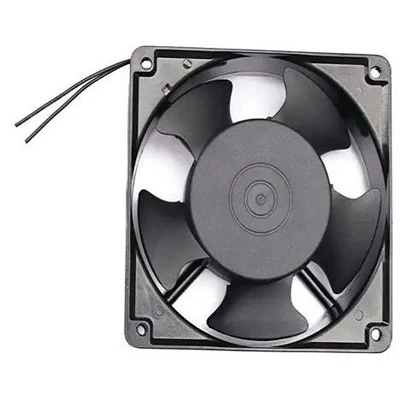
If you have questions about standards, testing, or our EC fan lineup, reach out to our team to chat. We’re happy to break it down in plain English—no jargon, no fine print, just real answers about compliant EC fans.
Electronics Cooling Fan References
IEC 60335-1:2020, Household and similar electrical appliances – Safety – Part 1: General requirements
ISO 5801:2017, Industrial fans – Performance testing using standardized airways
EU Regulation 2019/2020, Ecodesign for energy-related products
UL 507:2022, Standard for Safety for Fans and Ventilators
Dongguan Shengzhirong Electronics Co., Ltd.
As one of the most professional ec fan manufacturers and suppliers in China, our products have good reputation in the market. Please rest assured to wholesale high quality ec fan made in China here from our factory. Customized orders are welcome.
Address: 6/F, Building 2, No.68, Shunxing 2nd Road, Dajingtou 2nd Industrial Zone, Dalang Town, Dongguan City, Guangdong, China
E-mail: szr_coolingfan@163.com
WebSite: https://www.szrfan.com/
