What are the rheological properties of PVC granules?
As a PVC granules supplier, I’ve witnessed firsthand the critical role that rheological properties play in the performance and processing of our products. Rheology, the study of the flow and deformation of materials, is essential when it comes to understanding how PVC granules behave under various conditions during manufacturing processes. In this blog, I’ll delve into the key rheological properties of PVC granules, their significance, and how they impact the end – use applications. PVC Granules

Viscosity
Viscosity is perhaps the most well – known rheological property. It measures a material’s resistance to flow. In the case of PVC granules, viscosity is a crucial factor during extrusion, injection molding, and calendering processes. High – viscosity PVC granules are more resistant to flow, which means they require more energy to process. This can be a double – edged sword. On one hand, high – viscosity PVC can provide better mechanical properties in the final product, such as higher tensile strength and better dimensional stability. For example, in the production of PVC pipes that need to withstand high pressure, high – viscosity PVC granules are often preferred.
On the other hand, low – viscosity PVC granules flow more easily. They are ideal for applications where complex shapes need to be formed, like in the production of thin – walled PVC products. During the injection molding process, low – viscosity PVC can fill the mold cavities more quickly and completely, resulting in fewer defects and a more uniform product. However, low – viscosity PVC may have relatively weaker mechanical properties compared to its high – viscosity counterpart.
The viscosity of PVC granules can be influenced by several factors. The molecular weight of PVC is one of the most significant. Higher molecular weight PVC generally has a higher viscosity because the long polymer chains are more entangled, making it more difficult for them to move past one another. The presence of plasticizers also affects viscosity. Plasticizers are additives that increase the flexibility and workability of PVC. They do this by reducing the intermolecular forces between the polymer chains, thereby lowering the viscosity of the PVC mixture.
Shear Thinning Behavior
PVC granules exhibit shear thinning behavior, which is a common property in many non – Newtonian fluids. Shear thinning means that the viscosity of the PVC decreases as the shear rate increases. In practical terms, this is extremely beneficial during processing. When PVC granules are subjected to high shear forces, such as in an extruder or an injection molding machine, their viscosity drops, allowing them to flow more easily through narrow channels and around complex geometries.
For instance, in an extrusion process, the screw of the extruder applies a high shear rate to the PVC granules. As the shear rate increases, the PVC becomes less viscous, enabling it to be pushed through the die to form the desired shape, like a pipe or a profile. This behavior is crucial for efficient and high – quality production. If PVC did not exhibit shear thinning, the high viscosity at rest would make it nearly impossible to process through the small openings in the dies without extremely high pressure and energy consumption.
The degree of shear thinning in PVC can be controlled by adjusting the formulation, including the type and amount of additives. For example, certain lubricants can enhance the shear – thinning behavior of PVC, making it even more manageable during processing.
Elasticity
Elasticity is another important rheological property of PVC granules. Elasticity refers to the ability of a material to return to its original shape after deformation. In the context of PVC, elasticity is relevant during processes where the material is subjected to temporary stress. For example, during the injection molding process, the PVC melt is forced into a mold under high pressure. The material fills the mold cavity and takes on the shape of the mold. Once the pressure is released, the elastic nature of PVC comes into play.
A certain level of elasticity is desirable in PVC products. It allows the material to withstand minor impacts and deformations without permanent damage. For example, in PVC window profiles, elasticity helps the profiles to maintain their shape and integrity when exposed to normal wear and tear, such as wind pressure and temperature changes. However, too much elasticity can be a problem. In some precision – molding applications, excessive elasticity might cause the part to shrink or deform after demolding, leading to dimensional inaccuracies.
The elasticity of PVC can be modified by the addition of specific polymers or copolymerization. For example, blending PVC with an elastomeric polymer can increase its elasticity, which is useful in applications where a more flexible and resilient PVC material is required.
Thermal Rheology
The behavior of PVC granules under different temperatures is also a critical aspect of their rheological properties. PVC is a thermoplastic, which means it softens when heated and hardens when cooled. The melting point and the thermal stability of PVC are important considerations during processing.
When heated, PVC granules start to soften and eventually melt. The melting process is a complex rheological phenomenon. The temperature at which PVC starts to melt is influenced by its formulation, including the molecular weight, the presence of plasticizers, and other additives. A lower melting point allows for easier processing, as less energy is required to reach the molten state. However, if the melting point is too low, the PVC may not have sufficient heat resistance for certain applications.
Thermal stability is equally important. PVC can degrade when exposed to high temperatures for extended periods. During degradation, the polymer chains can break, leading to a change in the rheological properties and a reduction in the mechanical properties of the final product. To improve thermal stability, heat stabilizers are added to the PVC formulation. These stabilizers help to prevent or slow down the degradation process, allowing the PVC to be processed at elevated temperatures without significant quality loss.
Importance of Rheological Properties in Different Industries
The rheological properties of PVC granules have a profound impact on various industries.
In the construction industry, PVC pipes and profiles are widely used. For pipes, the right rheological properties ensure proper extrusion and a smooth inner surface, which is essential for the efficient flow of fluids. High – viscosity PVC with good mechanical properties is used for high – pressure pipes, while low – viscosity PVC may be used for drainage pipes where rapid filling of the mold is more important. In window profiles, the elasticity and thermal stability of PVC are crucial for withstanding environmental factors and maintaining long – term performance.
In the automotive industry, PVC is used for interior components such as dashboards and door panels. The rheological properties determine how well the PVC can be molded into complex shapes with a high – quality finish. Shear thinning behavior is particularly important here, as it allows the PVC melt to flow into the intricate details of the molds.
In the packaging industry, PVC films and sheets are common. The viscosity and elasticity of PVC granules affect the quality of the films, including their thickness uniformity and tear resistance. Low – viscosity PVC can be easily processed into thin films, while the right level of elasticity ensures that the films can be stretched and wrapped around products without breaking.
Conclusion
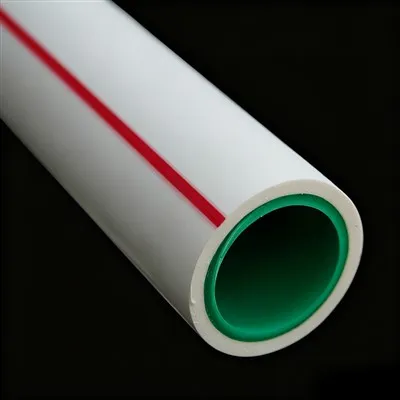
Understanding the rheological properties of PVC granules is essential for both suppliers like me and our customers. These properties determine how the PVC behaves during processing and ultimately impact the quality and performance of the final products. By carefully controlling factors such as viscosity, shear thinning behavior, elasticity, and thermal rheology, we can produce PVC granules that meet the specific requirements of different industries.
Plastic Pipe If you are in need of high – quality PVC granules and want to discuss how the rheological properties can be tailored to your application, I encourage you to reach out. We are committed to providing the best – suited PVC solutions for your manufacturing processes. Whether you are involved in construction, automotive, packaging, or any other industry that uses PVC, we can work together to ensure that you get the most out of our products.
References
- Barnes, H. A., Hutton, J. F., & Walters, K. (1989). An Introduction to Rheology. Elsevier.
- Bird, R. B., Armstrong, R. C., & Hassager, O. (1987). Dynamics of Polymeric Liquids, Volume 1: Fluid Mechanics. Wiley.
- Tadmor, Z., & Gogos, C. G. (2006). Principles of Polymer Processing. Wiley.
Hebei Ruijie Pipe Industry Co., Ltd.
Hebei Ruijie Pipe Industry Co., Ltd. is one of the most experienced PVC granules manufacturers and suppliers in China. With a professional production team, we are able to meet the needs of the majority of our customers. Welcome to wholesale high quality PVC granules in stock here from our factory. Contact us for pricelist and free sample.
Address: Industrial Park, Shaozhuang Township, Suning County, Cangzhou City, Hebei Province
E-mail: 1987870474@qq.com
WebSite: https://www.rjpprpipe.com/
