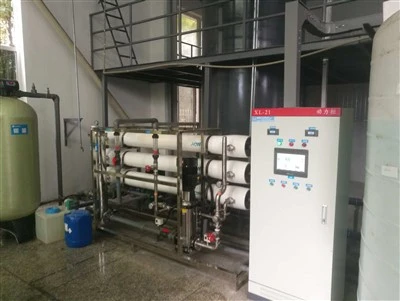
As a supplier in the field of pure water systems, I’ve witnessed firsthand the transformative power these systems hold across various industries. In this blog post, I’ll delve into what a pure water system is, its components, applications, and why investing in the right one is crucial for your business. Pure Water System
Understanding the Concept of a Pure Water System
A pure water system is a sophisticated setup designed to remove impurities from water, producing water that meets specific purity standards. The definition of "pure water" can vary depending on its intended use. In some cases, it might mean water free from visible particles, while in others, it could refer to water with extremely low levels of dissolved minerals, chemicals, and microorganisms.
The journey to producing pure water involves multiple stages of treatment. The process typically starts with pre – treatment to remove large particles and contaminants that could damage the more sensitive purification components. This is followed by primary purification steps, which target dissolved substances and microorganisms, and may end with polishing steps to achieve the highest level of purity required.
Key Components of a Pure Water System
Pre – treatment Components
- Sediment Filters: These are the first line of defense in a pure water system. They are designed to remove large particles such as sand, silt, rust, and debris from the water. Sediment filters come in various micron ratings, with lower micron ratings providing finer filtration. For example, a 5 – micron filter will remove particles larger than 5 microns, while a 1 – micron filter offers a higher level of filtration.
- Carbon Filters: Carbon filters are used to remove chlorine, chloramines, and organic compounds from the water. Chlorine and chloramines are commonly added to municipal water supplies as disinfectants, but they can damage reverse osmosis membranes and ion exchange resins. Carbon filters work through a process called adsorption, where the contaminants adhere to the surface of the carbon.
Primary Purification Components
- Reverse Osmosis (RO) Systems: RO is one of the most widely used primary purification methods in pure water systems. It works by applying pressure to the water, forcing it through a semi – permeable membrane. The membrane allows water molecules to pass through while blocking dissolved salts, minerals, and other contaminants. RO systems can remove up to 99% of dissolved solids, making them highly effective in producing pure water.
- Ion Exchange Resins: Ion exchange is a process where ions in the water are exchanged for other ions of the same charge. In a pure water system, cation exchange resins remove positively charged ions such as calcium, magnesium, and sodium, while anion exchange resins remove negatively charged ions such as chloride, sulfate, and carbonate. Ion exchange is often used in combination with RO systems to achieve even higher levels of purity.
Polishing Components
- Ultrafiltration (UF) and Nanofiltration (NF) Membranes: UF and NF membranes are used to remove smaller particles, colloids, and some organic molecules that may have passed through the RO system. UF membranes have larger pore sizes than NF membranes, allowing them to remove larger particles, while NF membranes can remove smaller molecules and some divalent ions.
- UV Sterilizers: UV sterilizers use ultraviolet light to disinfect the water by inactivating microorganisms such as bacteria, viruses, and protozoa. The UV light damages the DNA of the microorganisms, preventing them from reproducing and rendering them harmless.
Applications of Pure Water Systems
Pharmaceutical and Biotechnology Industries
In the pharmaceutical and biotechnology industries, the quality of water used in the manufacturing process is of utmost importance. Pure water is used in the production of drugs, vaccines, and medical devices, as well as in research and development. Contaminants in the water can affect the efficacy and safety of the products, so strict purity standards must be met. A pure water system can ensure that the water used in these industries is free from bacteria, viruses, pyrogens, and other contaminants.
Electronics Manufacturing
The electronics manufacturing industry requires high – purity water for processes such as semiconductor fabrication, wafer cleaning, and circuit board manufacturing. Even the smallest particle or dissolved impurity in the water can cause defects in the electronic components, leading to product failures. Pure water systems are used to produce water with extremely low levels of conductivity and total dissolved solids (TDS) to meet the stringent requirements of the electronics industry.
Food and Beverage Industry
In the food and beverage industry, pure water is used in various processes, including ingredient preparation, product formulation, and cleaning. The quality of the water can affect the taste, appearance, and shelf life of the products. A pure water system can remove contaminants such as chlorine, heavy metals, and microorganisms from the water, ensuring that the final products are safe and of high quality.
Laboratory and Research Facilities
Laboratories and research facilities rely on pure water for a wide range of applications, including chemical analysis, cell culture, and chromatography. The purity of the water can significantly impact the accuracy and reliability of the experimental results. Pure water systems are designed to produce water with specific purity levels, such as Type I, Type II, or Type III water, depending on the requirements of the application.
Choosing the Right Pure Water System
When choosing a pure water system for your business, several factors need to be considered.
Water Quality Requirements
The first step is to determine the specific purity requirements of your application. This will depend on the industry you are in and the processes you are using. For example, pharmaceutical applications typically require water with very low levels of bacteria, pyrogens, and dissolved solids, while food and beverage applications may have different requirements.
Flow Rate
The flow rate of the pure water system refers to the amount of purified water it can produce per unit of time. This is an important consideration, especially if you have high – volume water requirements. You need to choose a system that can meet your current and future flow rate needs.
Maintenance and Operating Costs
Another factor to consider is the maintenance and operating costs of the pure water system. Some systems may require more frequent filter changes, chemical regeneration, or membrane replacement, which can increase the overall cost of ownership. You should also consider the energy consumption of the system, as this can have a significant impact on your operating costs.
System Reliability and Support
The reliability of the pure water system is crucial, especially in industries where downtime can be costly. You should choose a system from a reputable supplier that offers reliable products and excellent customer support. A good supplier will provide installation, training, and maintenance services, as well as technical support in case of any issues.
Why Partner with Us
As a leading supplier of pure water systems, we have the expertise and experience to provide you with the right solution for your business. We understand that every customer has unique requirements, and we work closely with you to design and install a customized pure water system that meets your specific needs.

Our systems are built using high – quality components and the latest technology, ensuring reliable performance and long – term durability. We also offer comprehensive maintenance and support services to keep your system running smoothly and efficiently.
RO DI Water System If you’re in the market for a pure water system, we invite you to contact us for a consultation. Our team of experts will be happy to discuss your requirements, provide you with a detailed quote, and answer any questions you may have. Investing in the right pure water system is an important decision for your business, and we’re here to help you make the best choice.
References
- AWWA (American Water Works Association). "Water Quality and Treatment: A Handbook of Community Water Supplies."
- ASTM International. Standards related to water purity for various industries.
- "Principles of Water Treatment" by David W. Hendricks.
Shenzhen Jkon Environmental Protection Technology Co., Ltd.
As one of the most professional pure water system manufacturers and suppliers in China, we’re featured by quality products and good service. Please rest assured to buy customized pure water system made in China here from our factory. Contact us for more details.
Address: Shanghenglang Industrial park, Daloang Street, Longhua District, Shenzhen, China
E-mail: sales@jkontech.com
WebSite: https://www.jkontech.com/
