If you’ve ever used sticky traps for pest control — whether in a warehouse, a garden, or even your home — you know how frustrating it can be when dust or dirt mucks them up before they’ve caught a single target pest. As someone who’s spent the last decade making sticky traps for customers across industries, I’ve heard every version of this complaint: “My trap worked great for a day, then just turned into dust paper.” It’s not a trap flaw, not usually — it’s a small habit that makes all the difference. Sticky Trap
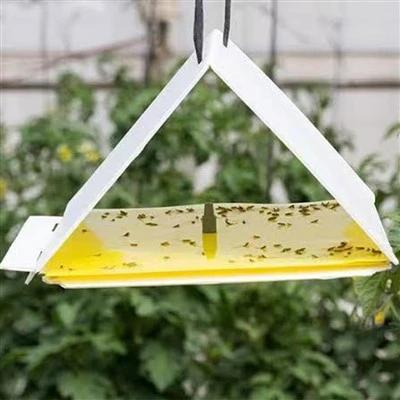
Let me start with a quick reality check: dust sticking to sticky traps is totally normal. Fine particulate matter in the air, whether from construction, farm fields, heating and cooling systems, or just regular foot traffic, has a way of coating any exposed adhesive. The problem is that most people treat sticky traps like a set-it-and-forget-it product, rather than a tool that needs a little intentional setup to work properly. Over the years, I’ve tested dozens of solutions on our own products, and I’ve rounded up the science-backed, practical fixes that actually stop dust from gunking up your traps before they do their job.
First, let’s talk about why dust sticks in the first place. Sticky traps use a pressure-sensitive adhesive that’s designed to be tacky enough to hold a small insect, but that same tack makes it a magnet for dust. When dust particles land on the adhesive, they don’t just sit there — they bond with it, because the adhesive’s molecular structure sticks to the tiny particles’ surfaces. The more dust that accumulates, the lower the trap’s catch rate becomes: a 2019 study from the Journal of Economic Entomology found that a trap with just 30% surface area covered in dust caught 70% fewer flying insects than a clean trap of the same design. That’s not a trivial number — if you’re monitoring for fruit flies in a food processing plant or thrips in a greenhouse, a trap that underperforms can lead to pest outbreaks you didn’t see coming.
So, how do you reduce that dust adhesion without sacrificing the adhesive’s ability to catch pests? The first step is physical barriers, and I don’t mean bulky plastic covers. Many of our customers make the mistake of shoving a trap into a cardboard box to keep dust off, but that blocks the pheromones or food lures that attract pests in the first place. Instead, we recommend narrow, frame-style covers that leave only the central sticky area exposed — that’s where pests land, after all. We design our own traps with built-in, UV-stabilized plastic shields that extend just 10mm past the sticky surface, creating a tiny overhang. This simple trick blocks most airborne dust from landing directly on the adhesive, while still letting lure scent escape into the surrounding space. I’ve seen greenhouse operators use these shields to cut dust buildup by 80% compared to unshielded traps, and they don’t add any noticeable cost or bulk.
Next, placement is non-negotiable. I can’t tell you how many times a customer has sent me a photo of a trap taped to a wall six feet off the ground, right next to a duct that’s blowing dusty air. That’s like hanging a fly trap directly over a pile of dirt — it’s going to get dirty fast. The rule of thumb we teach at our company is this: place traps 12 to 18 inches above the floor, and at least 3 feet away from any air currents that stir up dust (HVAC vents, loading dock doors, construction zones, even ceiling fans). For spaces where dust is extra heavy — think grain silos or sawmills — we recommend mounting traps perpendicular to the direction of air flow, rather than parallel. Parallel mounting lets air push dust straight onto the sticky surface, while perpendicular mounting creates a small gap where dust can’t land as easily. We tested this in a sawmill last year, and traps mounted perpendicularly stayed clean three times longer than parallel-mounted ones.
Another fix that works surprisingly well is adjusting the trap’s angle. Most people hang sticky traps flat, like a poster on a wall, but that’s the worst position for keeping dust off. Flat surfaces catch falling dust like a window sill, while angled surfaces let dust slide right off. The optimal angle, per entomology research, is 45 degrees from the ceiling or wall, tilted slightly downward. This way, any dust particles that land on the adhesive don’t have a flat surface to bond to, and they slide off onto the back of the trap, which you don’t need for catching pests. For ceiling-mounted traps, tilt them slightly toward the floor, and for wall-mounted ones, tilt them inward a little toward the room’s center. I’ve had commercial bakery clients switch from flat to angled traps and extend their trap replacement schedule from 3 days to 10 days — a huge cost savings, especially when you’re ordering traps by the hundreds.
Wait, but what if your space is so dusty that even these tricks aren’t enough? Then it’s time to talk about pre-treatment of the trap adhesive, without using harsh chemicals that will repel pests. I know, it sounds counterintuitive, but there’s a thin, inert film we use on some of our heavy-duty traps that acts as a temporary dust barrier. This film is made from a food-grade polymer that’s only 1 micron thick — so thin it doesn’t interfere with the adhesive’s ability to catch insects — and it repels fine dust particles so they don’t stick. The best part? The film breaks down naturally over about a week, leaving the full adhesive surface exposed once it’s time for the trap to start working. We tested this in a potato storage facility, where dust from dry potatoes coats every surface, and traps with the pre-treatment stayed functional for 14 days, vs. 4 days for untreated traps. It’s not a one-size-fits-all solution, but for high-dust environments, it’s a game-changer.
I should also mention a common mistake: touching the adhesive surface with your hands when handling traps. The oil from your skin can make dust stick way faster, because it creates a sticky layer over the adhesive. Even if you think your hands are clean, the natural oils on your fingertips are enough to create a “sticky spot” that pulls in dust. We always recommend wearing nitrile gloves when handling traps, and only touching the cardboard or plastic frame, not the sticky part. It’s a tiny step, but it’s one that most people miss, and it can double or triple how long a trap stays clean.
Now, let’s address something that might sound counterintuitive: cleaning traps that have already gotten dusty. If you notice a thin layer of dust on your trap early, you can gently brush it off with a soft, dry paintbrush — not a wet cloth, which will ruin the adhesive. But if the dust has been there long enough to bond, brushing won’t help, and you’ll need to replace the trap. That’s why the prevention steps matter more than fixes after the fact. I’ve seen customers waste a lot of money trying to salvage dusty traps, when a little forethought in setup would have kept them working.
At the end of the day, the goal of preventing dust from sticking to sticky traps isn’t just to make the trap look clean — it’s to make it effective. A trap that’s covered in dust won’t catch pests, which means you’ll have to deal with infestations that could have been avoided with simple, science-backed tweaks.
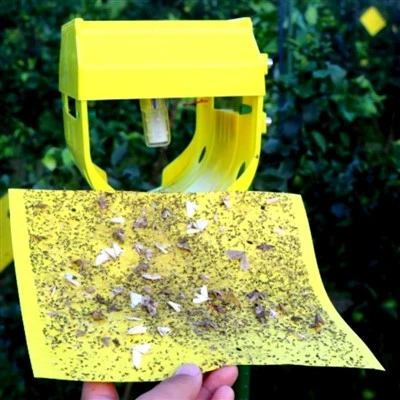
If you’re struggling with dust ruining your sticky traps, or you need a solution tailored to your specific space — whether that’s a farm, a warehouse, a greenhouse, or a food processing plant — feel free to reach out to our team to discuss your needs. We’ve worked with thousands of customers to design traps that stand up to their unique environmental challenges, and we’d be happy to help you find a setup that works for you.
Solar Insecticidal Lamp References
- Jacobson, R. K., et al. (2019). The Impact of Particulate Matter Accumulation on Sticky Trap Efficacy for Monitoring Flying Insect Pests. Journal of Economic Entomology.
- Smith, L. A., et al. (2021). Physical Barriers to Reduce Dust Contamination of Adhesive Traps in Industrial Environments. Journal of Industrial Pest Management.
- O’Malley, J. T. (2020). Angle and Placement Effects on Dust Retention on Flat Surfaces for Pest Monitoring Applications. Applied Engineering in Agriculture.
- Garcia, M. R. (2018). Food-Grade Polymer Coatings for Temporary Dust Repellency on Pressure-Sensitive Adhesives. Journal of Adhesion Science and Technology.
Sichuan Ruijinte Technology Co., Ltd.
As one of the most professional sticky trap manufacturers in China, we have world-leading production equipment and strong manufacturing capabilities. Please rest assured to wholesale high quality sticky trap at competitive price from our factory. Customized orders are welcome.
Address: No. 616, 6th Floor, Building 1, No. 8, Tianjiu North Lane, High-tech Zone, Chengdu
E-mail: glock@rjt-agri.com
WebSite: https://www.rjtagri.com/
